
Table of Contents
Missing teeth can affect much more than your smile. They can impact your confidence, your ability to chew comfortably, and even your long-term oral health. For many patients, dental implants in Qatar have become one of the most trusted and modern solutions to restore both function and aesthetics.
Unlike removable dentures or traditional bridges, dental implants are designed to replace missing natural teeth from the root level. This means they integrate with the jawbone, providing strong support and helping preserve bone structure over time. For patients who want a stable, long-term solution, implants are often considered the closest alternative to natural teeth.
In Qatar especially in Doha there are many private dental clinics offering implant treatments. However, patients often feel overwhelmed by questions such as:
- How much do dental implants cost in Qatar?
- Are dental implants safe?
- Is the procedure painful?
- How long does recovery take?
This guide is written to answer those questions clearly and honestly. We will explain the dental implant procedure steps, expected recovery, safety considerations, and what affects dental implants cost in Qatar. Whether you are considering a single tooth replacement or full mouth dental implants, understanding the process will help you make a confident and informed decision.
Your smile is a long-term investment. Taking the time to understand your options is the first step toward long-term success and better oral health.
What Are Dental Implants and How Do They Work?
When a tooth is lost, the problem is not only visible above the gum. The root of the tooth is also gone. Over time, the jawbone in that area can begin to shrink, which may affect nearby teeth and facial structure.
Dental implants are designed to replace both the root and the visible part of the tooth, helping restore function and protect long-term oral health.
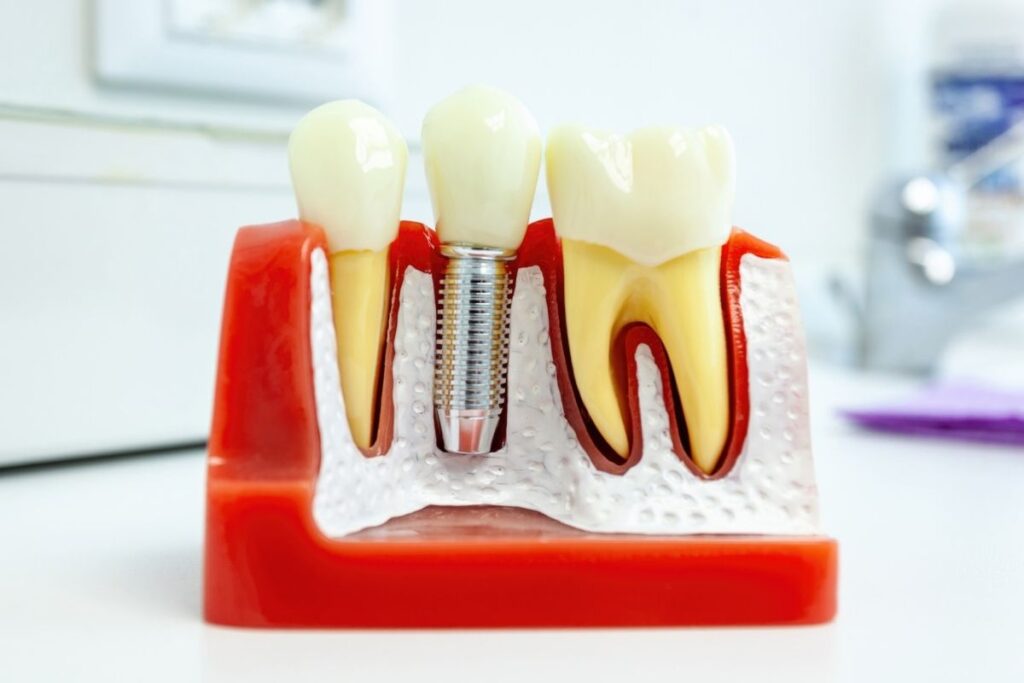
How Dental Implants Replace Natural Teeth
A dental implant consists of three main parts:
- Titanium Implant Screw
This small biocompatible post is placed into the jawbone. It acts as an artificial tooth root. - Abutment
This connector piece attaches to the implant and supports the crown. - Crown
The visible part of the restoration, designed to match the shape and color of your natural teeth.
Once placed, the implant integrates with the bone through a process called osseointegration. This biological fusion allows the implant to become stable and function like a natural tooth root.
For many patients in Qatar choosing dental implants, this stability is the main reason implants feel more secure than removable dentures.
Why Dental Implants Are Considered a Long-Term Solution
One of the biggest advantages of dental implants is their long term success rate. When properly planned and maintained:
- They help prevent jawbone loss
- They do not damage neighboring teeth (unlike bridges)
- They provide strong chewing ability
- They look and feel like natural teeth
With good oral hygiene and regular check-ups, implants can last 15–25 years or even longer.
For patients comparing implants in Qatar to other tooth replacement options, understanding this long-term benefit is essential. While the initial cost may seem higher than alternatives, many people choose implants because of their durability, comfort, and natural appearance.
Dental Implants Cost in Qatar
One of the first questions patients ask is about pricing. The cost of dental implants in Qatar can vary significantly depending on the clinic, the dentist’s experience, and the complexity of the case.
It’s important to understand that implant treatment is not just a single procedure. The final price usually includes several stages: consultation, imaging, surgical placement, healing, and crown placement. Because every patient’s bone condition and oral health are different, costs are always personalized.
Single Tooth Implant Cost in Qatar
For a single missing tooth, the average single tooth implant cost in Qatar typically ranges between:
QAR 4,000 – QAR 8,000 per tooth
However, this often depends on:
- Implant brand (European or American systems may cost more)
- Whether bone grafting is needed
- Type of final crown (zirconia, porcelain, etc.)
- Clinic location (central Doha vs other areas)
Some clinics advertise lower prices, but patients should always confirm whether the crown and abutment are included in the total.
Dental Implants Price in Doha Qatar
In Doha, pricing can vary between neighborhoods. For example, dental implants cost in Salwa Road Doha Qatar may differ from high-end private dental clinics in central commercial districts.
Premium implant clinics in Doha often charge higher fees due to:
- Advanced 3D CBCT imaging
- Digital surgical planning
- International implant brands
- Experienced implant dentist supervision
While cost is important, safety and long-term success should be equally prioritized.
Dental Implants 2pcs Teeth Price in Doha Qatar
For patients missing two teeth, pricing is not always simply doubled. In some cases, treatment planning may allow for cost optimization depending on spacing and bone condition.
The estimated range for two implants may fall between:
QAR 8,000 – QAR 15,000
A clinical evaluation is necessary to determine the exact treatment plan.
Full Mouth Dental Implants in Qatar Price
For patients missing most or all teeth, full mouth dental implants in Qatar are often performed using:
- All-on-4
- All-on-6
The cost for full mouth restoration can range between:
QAR 35,000 – QAR 70,000+
This depends heavily on:
- Number of implants used
- Type of final prosthesis
- Bone condition
- Surgical complexity
Because full-mouth cases are advanced procedures, selecting a dental implant specialist in Qatar becomes even more critical.
What Affects Dental Implants Cost in Qatar?
Several factors directly influence pricing:
- Implant brand and material quality
- Experience level of the implant dentist
- Need for bone grafting or sinus lifting
- Type of private dental clinic in Qatar
- Technology used (digital vs traditional methods)
While searching for affordable dental implants in Qatar, patients should avoid choosing based only on the lowest price. Implant treatment is a long-term investment in oral health, and proper planning significantly impacts long term success.
Choosing the Best Dental Clinic for Implants in Qatar
When considering dental implants in Qatar, selecting the right clinic is just as important as understanding the procedure itself. Implant treatment requires careful planning, surgical precision, and long-term follow-up. Choosing an experienced and well-equipped clinic significantly increases the chances of long term success.
Many patients searching for the best dental clinic for implants in Qatar feel unsure about what truly matters. Price is important, but safety, expertise, and aftercare should always come first.
What Makes an Experienced Implant Dentist in Qatar?
Not every general dentist performs implant surgery regularly. An experienced implant dentist in Qatar typically has:
- Advanced training in implantology
- Years of surgical experience
- A portfolio of completed implant cases
- Knowledge of bone grafting and complex restorations
- Familiarity with digital planning systems
Experience matters because every patient’s bone density, gum condition, and oral health history are different. Proper case selection and planning reduce complications and improve long-term stability.
Dental Implant Specialist vs General Dentist
While many dentists can place implants, a dental implant specialist in Qatar usually focuses more specifically on surgical implant procedures.
The difference often includes:
- Deeper understanding of jawbone anatomy
- Ability to handle advanced cases
- Management of complications
- Coordinated prosthetic planning
For straightforward single tooth cases, a trained general dentist may be sufficient. However, for multiple implants or full mouth restorations, specialization becomes more important.
What to Look for in an Implant Clinic in Doha
If you are comparing implant clinic options in Doha, consider the following:
1. 3D CBCT Imaging
Modern clinics use 3D scans to evaluate bone volume and nerve positioning accurately.
2. Sterilization Protocols
Strict infection control standards are essential for surgical procedures.
3. Transparent Treatment Planning
A clear explanation of dental implant procedure steps and total cost breakdown builds trust.
4. Aftercare Support
Recovery after dental implants requires follow-up visits and monitoring. A good clinic provides structured post-operative guidance.
Private dental clinics in Qatar vary widely in quality and pricing. Taking time to review qualifications, technology, and patient feedback can help you make a confident decision.
Dental Implant Procedure Steps Explained
Understanding the dental implant procedure steps helps reduce anxiety and allows you to prepare mentally and physically. While each patient’s treatment plan is personalized, the overall process follows a structured and predictable pathway.
Dental implants in Qatar are typically completed in multiple stages to ensure safety and long-term success.
Initial Consultation and 3D Assessment
The first step is a detailed clinical examination.
This usually includes:
- Oral health evaluation
- Digital X-rays or 3D CBCT scan
- Bone density assessment
- Review of medical history
Your dentist will determine whether you are a suitable candidate and whether additional procedures (such as bone grafting) are necessary.
At this stage, your treatment plan and estimated dental implants cost in Qatar will be discussed clearly.
Surgical Placement of the Implant
The implant surgery is performed under local anesthesia.
During the procedure:
- A small incision is made in the gum
- The titanium implant is carefully inserted into the jawbone
- The area is closed for healing
Most patients report that the procedure is more comfortable than expected. The surgery for a single implant often takes 30–60 minutes.
For multiple implants or full mouth dental implants in Qatar, the procedure time may be longer.
Healing & Osseointegration Phase
After placement, the healing process begins.
This phase allows the implant to fuse naturally with the jawbone a process called osseointegration.
Healing time typically ranges from:
- 2 to 4 months for most patients
During this period:
- Mild swelling or tenderness may occur for a few days
- Soft foods are recommended
- Oral hygiene is crucial
This stage is essential for long term success and implant stability.
Final Crown Placement
Once the implant is fully integrated, the final crown is placed.
The crown is custom-designed to:
- Match the shape of your natural teeth
- Blend with surrounding teeth
- Restore normal chewing function
At this point, the implant functions very similarly to a natural tooth.
Are Dental Implants Safe in Qatar?
Safety is one of the most important concerns for patients considering dental implants in Qatar. The good news is that dental implants are widely regarded as a safe and predictable treatment when performed by a qualified and experienced implant dentist.
Globally, implant success rates are reported to be above 95% in healthy patients. The key factor is not just the location, but the planning, surgical expertise, and aftercare provided.
Success Rates and Clinical Standards
Modern dental implants are made from biocompatible titanium, a material that has been used safely in medical treatments for decades. When placed correctly, the implant integrates naturally with the jawbone.
In reputable implant clinics in Doha, safety is supported by:
- 3D CBCT imaging for precise planning
- Sterile surgical environments
- International implant brands
- Clear post-operative instructions
Private dental clinics in Qatar that follow international protocols can offer high levels of clinical safety.
Who Is a Suitable Candidate?
Most healthy adults are candidates for dental implants. You may be suitable if:
- You have one or more missing teeth
- Your jawbone has adequate volume
- You maintain good oral hygiene
- You do not have uncontrolled systemic diseases
Even patients with mild bone loss may still qualify with additional procedures such as bone grafting.
A consultation is essential to determine your individual case.
Possible Risks and How to Minimize Them
Like any surgical procedure, implants carry potential risks, although complications are uncommon.
Possible risks include:
- Infection
- Implant failure due to poor bone integration
- Temporary swelling or discomfort
These risks are minimized by:
- Choosing an experienced implant dentist in Qatar
- Following proper aftercare instructions
- Avoiding smoking during healing
- Maintaining regular dental check-ups
When properly planned and maintained, implants offer long-term success and stability.
Is Dental Implant Surgery Painful?
One of the biggest fears patients have before getting dental implants in Qatar is pain. Many imagine a complicated and uncomfortable procedure. In reality, most patients describe the experience as much easier than they expected.
Dental implant surgery is performed under local anesthesia, meaning the area is completely numbed during the procedure. You should not feel pain while the implant is being placed only slight pressure or vibration.
What Do Patients Typically Feel During the Procedure?
During surgery:
- The gum is gently opened
- The implant is placed into the jawbone
- The site is closed for healing
Because modern techniques are minimally invasive and digitally planned, the procedure is controlled and precise.
For a single tooth implant, surgery often takes 30–60 minutes.
What About Pain After the Procedure?
After the anesthesia wears off, mild discomfort is normal. Most patients experience:
- Slight swelling
- Minor tenderness
- Mild soreness for 2–3 days
This is usually manageable with prescribed or over-the-counter pain medication.
Compared to tooth extraction, many patients report that implant placement is actually more comfortable.
When Should You Be Concerned?
Severe pain is not typical. If a patient experiences:
- Intense swelling
- Persistent bleeding
- Increasing pain after several days
They should contact their implant clinic immediately.
However, when dental implants are placed by an experienced implant dentist in Qatar, complications are uncommon.
Pain should not be the reason to delay treatment. Missing teeth can affect oral health, chewing efficiency, and jawbone stability over time. Understanding what to expect helps reduce fear and allows patients to make informed decisions.
Recovery After Dental Implants
Recovery is a key part of the overall success of dental implants in Qatar. While the surgical procedure itself is usually straightforward, proper healing ensures long-term stability and function.
Most patients are pleasantly surprised by how manageable the recovery process is.
First 24–72 Hours
The first few days after implant placement are the most important.
You may experience:
- Mild swelling
- Slight bleeding on the first day
- Tenderness around the surgical area
These symptoms are normal and usually peak within 48 hours.
To support healing:
- Apply cold compresses as advised
- Avoid hard or hot foods
- Stick to soft meals
- Do not smoke
- Follow medication instructions carefully
Most patients can return to daily activities within 1–2 days.
First Week Healing
Within 7–10 days:
- Swelling significantly reduces
- Gum tissue begins to heal
- Stitches (if used) may be removed
Maintaining good oral hygiene is critical. Gentle brushing and prescribed mouth rinses help prevent infection.
Your implant clinic in Doha will usually schedule a follow-up appointment to monitor healing.
Long-Term Healing & Osseointegration
While the visible gum heals quickly, the deeper healing process takes longer.
The implant must integrate with the jawbone a biological process called osseointegration. This typically takes:
- 2–4 months, depending on bone quality and overall health
During this period:
- The implant becomes stable
- The bone grows around the titanium surface
- Long-term success is established
Rushing this phase can increase the risk of failure, which is why careful monitoring by an experienced implant dentist in Qatar is essential.
Long-Term Care for Implant Success
Once the final crown is placed, implants require the same care as natural teeth:
- Daily brushing and flossing
- Regular dental check-ups
- Professional cleanings
- Avoiding smoking
With proper maintenance, dental implants can last decades and restore both oral health and confidence.
How Long Do Dental Implants Last?
One of the most important questions patients ask before choosing dental implants in Qatar is how long they will last. When properly placed and well maintained, dental implants can last 15–25 years or even a lifetime. The titanium implant itself is designed to integrate permanently with the jawbone, making it a very durable solution compared to other tooth replacement options.
However, the visible crown placed on top of the implant may need replacement after 10–15 years due to normal wear. Long-term success largely depends on oral hygiene, regular dental check-ups, overall health, and lifestyle habits such as smoking. With proper care and follow-up at a qualified implant clinic in Doha, implants can provide a stable, natural-looking solution for many years.
How Long Do Dental Implants Last?
Dental implants are designed as a long-term solution for missing teeth. In most healthy patients, the implant itself can last 15–25 years or even longer when properly placed and maintained. The crown attached on top may need replacement over time due to normal wear, but the titanium implant integrated into the jawbone is highly durable. Maintaining good oral health, attending regular dental check-ups, and avoiding habits like smoking all play an important role in ensuring long-term success.
Our Google Reviews
Frequently Asked Questions
How much is dental implants per tooth in Qatar?
The price of a single dental implant per tooth in Qatar generally ranges between QAR 4,000 and QAR 8,000, depending on the clinic, implant brand, and whether additional procedures such as bone grafting are required. It is important to confirm whether the abutment and crown are included in the total price.
Are dental implants safe in Qatar?
Yes, dental implants are considered a safe and well-established procedure when performed by an experienced implant dentist. Modern implant systems are made from biocompatible titanium and have high success rates when proper planning and hygiene are maintained.
How long do dental implants last?
With good oral hygiene and regular follow-up visits, dental implants can last 15–25 years or longer. The crown may need replacement over time, but the implant itself is designed to be a long-term solution.
Is dental implant surgery painful?
The procedure is performed under local anesthesia, so patients do not feel pain during surgery. Mild swelling or discomfort may occur afterward, but it is usually manageable with prescribed medication and resolves within a few days.
How long does recovery take after a dental implant?
Initial healing typically takes 7–10 days, while full integration of the implant with the jawbone can take 2–4 months. Your dentist will monitor the healing process before placing the final crown.
